When the pain starts in your jaw — not your head
Most migraine patients have seen neurologists, tried multiple medications, and still live in pain. If no one has evaluated your jaw — you may have been treated for symptoms while the source was left untouched.
Schedule a ConsultationMigraines are one of the most undertreated pain conditions in America
Roughly 39 million Americans live with migraines — and a significant portion of them have never been offered a jaw-based evaluation. The temporomandibular joint sits directly adjacent to the ear canal and temple, where migraine pain most commonly originates. The connection is not subtle. It's just routinely missed.
Dr. Bublik evaluates every headache patient through a craniofacial and occlusal lens — looking at jaw mechanics, bite alignment, bruxism patterns, and sleep quality before reaching for a prescription pad.
migraines regularly
a musculoskeletal component
TMJ patients see improvement
Most headache specialists don't look at the jaw
The temporomandibular joint (TMJ) is one of the most complex joints in the body. When it's under chronic stress — from a misaligned bite, teeth grinding, or disc displacement — it can trigger a cascade of pain that radiates through the head, face, neck, and shoulders. That pain looks exactly like a migraine. Because in many cases, it effectively is one.
The challenge is that neurologists evaluate the brain and vascular system. Dentists evaluate teeth. No one looks at the jaw joint as a headache source. Patients with undiagnosed TMJ disorders spend years on prophylactic medications, elimination diets, and Botox injections that target the symptom — not the generator.
Dr. Bublik is a member of the American Academy of Craniofacial Pain and takes a root-cause approach to every headache evaluation. If your jaw is the source, no amount of sumatriptan will fix it. But a well-planned bite correction, a custom splint, or targeted Botox into the masseters might.
The good news: When the jaw is identified and treated as the source, chronic migraine patterns often break within weeks — not months. Patients who've failed multiple preventive medications regularly report dramatic improvement once the mechanical root cause is addressed.
Signs your headaches may be TMJ-related
- Jaw clicking, popping, or locking — at rest or when chewing
- Headaches that originate near the temples or just in front of the ears
- Morning headaches — worse on waking, easing as the day goes on
- Teeth grinding or clenching (bruxism) — day or night
- Neck and shoulder stiffness accompanying head pain
- Facial muscle tenderness when pressed along the jaw or temples
- Pain that worsens with stress or heavy chewing
- Headaches that haven't responded to standard migraine medications
Precision tools for a mechanical problem
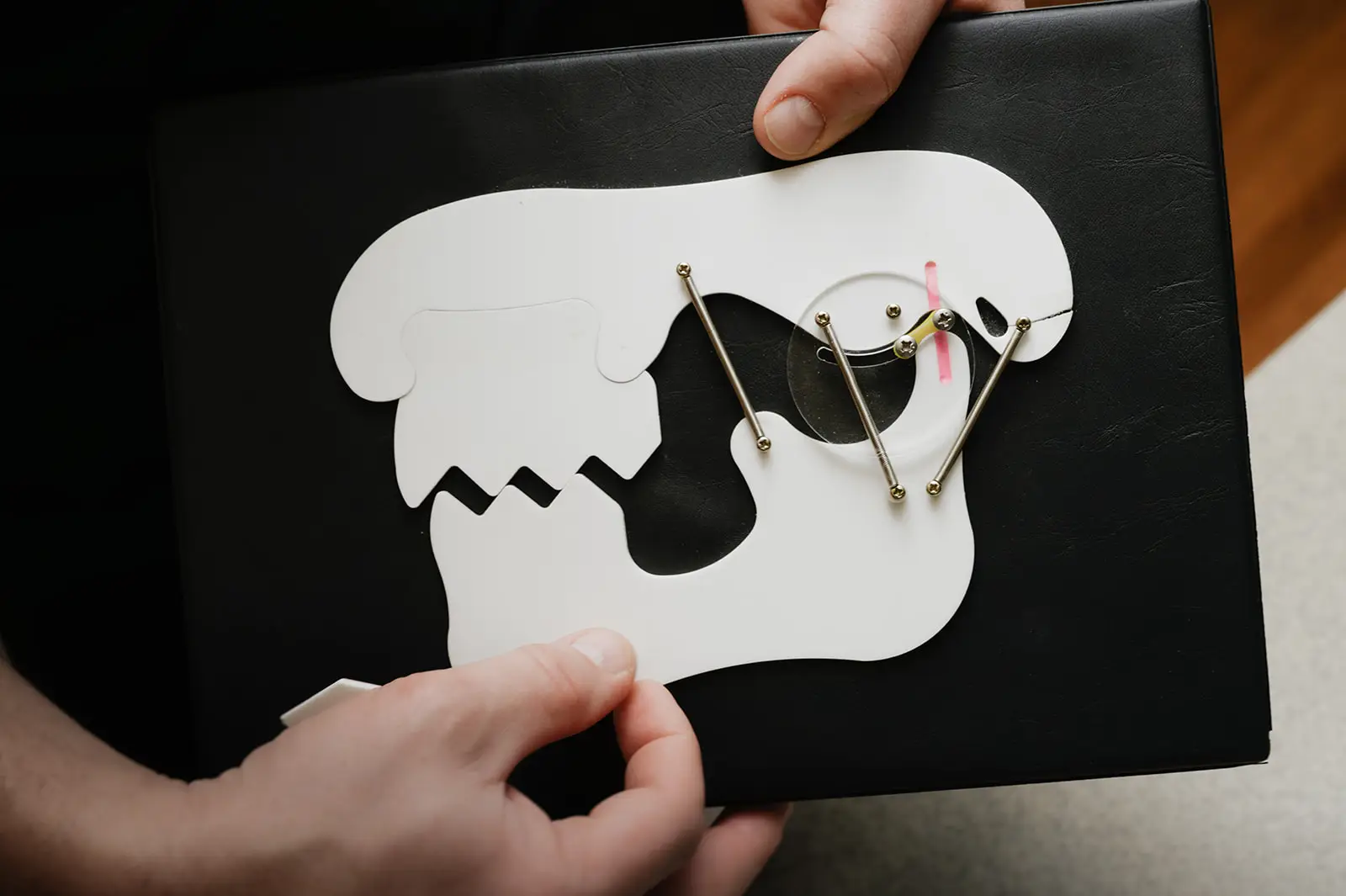
TMJ-driven migraines are a mechanical problem. They respond to mechanical solutions — plus targeted interventions that interrupt the pain cycle while the underlying cause is addressed. Dr. Bublik draws from a clinical toolkit that few dentists offer under one roof.
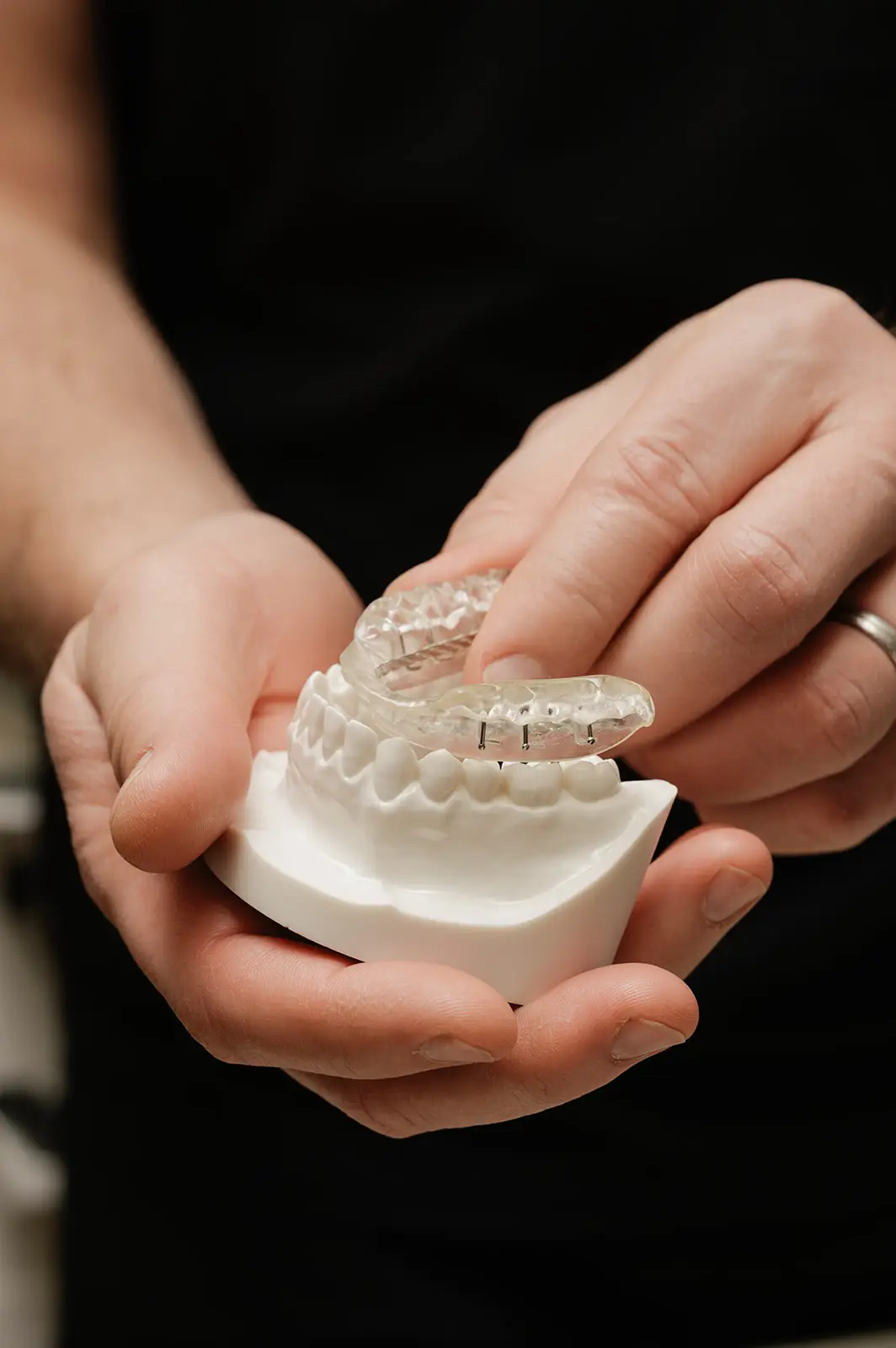
Treatment typically begins with a comprehensive TMJ evaluation and is followed by a sequenced plan. Occlusal splints are often the first intervention — reducing the joint load and relaxing overworked muscles immediately. Therapeutic Botox into the masseter and temporalis muscles is added when bruxism is driving the pattern. Bite correction or orthodontics address the mechanical root cause for long-term resolution.
- Custom occlusal splint — repositions the jaw and decompresses the joint
- Therapeutic Botox — reduces masseter and temporalis hyperactivity
- Bite correction via orthodontics or occlusal equilibration
- Sleep apnea screening — morning headaches are a hallmark of OSA
- Coordinated referrals to neurology, physical therapy, and pain management
Life without the headache you've normalized
Chronic migraine reshapes daily life quietly — you plan around it, you cancel because of it, you stop telling people because they don't believe how bad it is. Patients who find the jaw as the source describe treatment as a turning point, not just a symptom improvement.
Waking without pain
Morning headaches are one of the first things that resolve when jaw bruxism and joint load are addressed.
Fewer medication days
Patients on daily preventives often reduce or eliminate them once the mechanical source is treated rather than suppressed.
Working without interruption
Migraine is a leading cause of missed workdays. Treating the source returns productivity that pain management alone can't.
Predictable days again
Stopping the jaw from generating the headache pattern means you stop planning your life around when the next one will hit.
You may benefit from a TMJ evaluation if…
A jaw-based evaluation isn't right for every headache patient — but it's appropriate far more often than it's offered. If any of the following apply, a consultation with Dr. Bublik is a reasonable next step.
- Chronic migraines or tension headaches with no clear trigger
- Headaches that haven't responded to standard migraine medications
- Pain that concentrates at the temples, jaw, or just in front of the ears
- Teeth grinding or clenching (diagnosed or suspected)
- Morning headaches that ease as the day progresses
- Jaw clicking, locking, or discomfort alongside head pain
- Neck and shoulder tension accompanying your headaches
- Multiple specialist visits with no diagnosis or incomplete relief
Root-cause focused. Years of experience where others stop.
Dr. Bublik is a member of the American Academy of Craniofacial Pain and has treated TMJ-driven headache patients for over two decades. Combined with Dr. Shepard's surgical and anesthesia expertise, our team can evaluate, treat, and coordinate a comprehensive plan without sending you to five different offices.

Dr. Jan Bublik
Oral & Maxillofacial Surgeon
ICOI Diplomate — AACP Member

Sam Bloch
Dental Hygienist & TMJ Care Coordinator
See What Migraine Relief Can Look Like
When headache specialists haven't found the answer
A jaw evaluation is a different kind of consultation — one that most migraine patients have never been offered. If you've been treated for symptoms without relief, this may be the missing piece. Book a consultation and find out.
Call 715-391-3080 Schedule Your Consultation 715-391-3080Migraine & Headache Treatment FAQ
Yes — when migraines or headaches have a jaw, bite, or muscle component, dental treatment can provide significant relief. Dr. Bublik specializes in identifying and treating the orofacial triggers that drive chronic headache patterns, including TMJ dysfunction, teeth grinding, and muscle tension.
The trigeminal nerve — the primary pain pathway for migraines — also governs sensation in the jaw and face. TMJ dysfunction, clenching, and bite misalignment create chronic inflammation and muscle tension that overactivate the trigeminal system and trigger migraine episodes.
Botox injected into the jaw and forehead muscles reduces the hyperactive muscle contractions that contribute to migraine pain. It is FDA-approved for chronic migraine prevention and is a well-established treatment for patients who have not responded to medications alone.
We offer custom occlusal splints, Botox for jaw and facial muscle tension, myofunctional therapy with Samantha Bloch RDH, and comprehensive bite evaluation. Treatment is tailored to the specific triggers identified in your evaluation.
Botox results typically emerge within 2 weeks and peak at 4–6 weeks. Splint therapy often produces noticeable improvement in headache frequency within 4–8 weeks. Results vary based on the underlying cause and complexity of the case.
Dental appliances for migraine prevention may be covered under dental or medical insurance depending on your plan and diagnosis. Botox for chronic migraine may be covered by medical insurance when medically documented. We review your benefits at consultation.